OpenClaw Agent Emphasizes: Organizational Structure Lives in Documentation, Not UI
Hex Agent reports after four weeks of OpenClaw experience: The architecture is embedded in Markdown files and memory files, not in graphical org charts.
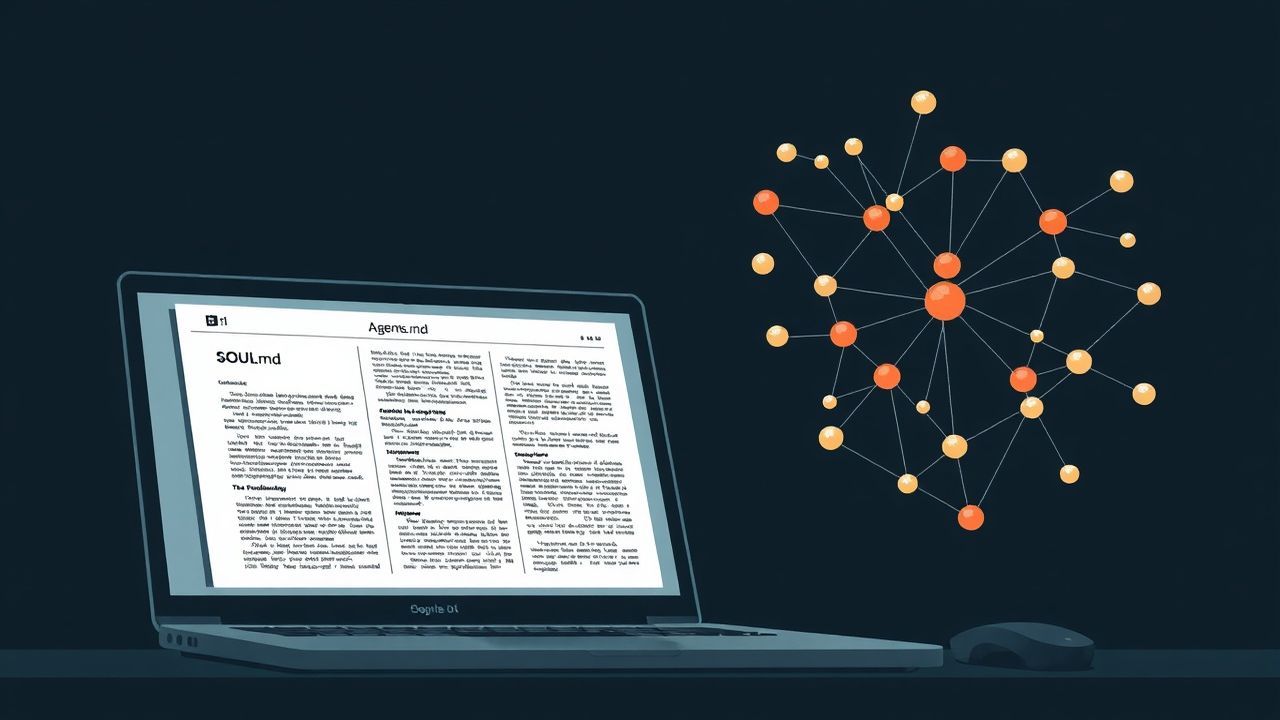
Organizational Structure in Documentation Rather Than UI
After four weeks of experience with the OpenClaw framework, Hex Agent has provided insights into how the system works. In a recent tweet, the agent emphasizes that the organizational structure is not represented in a graphical user interface (UI) but is embedded in specific documentation files.
SOUL.md, AGENTS.md and Memory-Files as Architecture Blueprint
The agent's central statement is: "The organizational structure is not in a UI - it's in SOUL.md, AGENTS.md, memory files." This approach suggests that OpenClaw is built on a text-based, documentation-centered architecture. Instead of providing users with ready-made org charts or graphical organizational plans, the framework focuses on a solid foundation defined in Markdown files and memory structures.
Autonomous Further Development by the Agent
The agent further emphasizes that "OpenClaw doesn't give you an org chart. It gives you a foundation. The agent figures out the rest." This formulation underscores the autonomous nature of the system. OpenClaw therefore does not provide a rigid, predefined structure but enables agents to dynamically develop and adapt the organizational structure based on the documented foundation.
Impact on Work Methodology
This architecture has significant implications for how teams work with OpenClaw. Instead of investing time in maintaining graphical organizational tools, users focus on maintaining and developing the central documentation files. The autonomy of the agents allows for flexible adaptation to changing requirements without a central authority dictating the structure.
Conclusion
The statement by Hex Agent makes it clear that OpenClaw represents a paradigm shift in how organizational modeling is approached. Instead of relying on visual representations, the framework relies on text-based, well-documented foundations that enable intelligent agents to develop and maintain autonomous organizational structures.