Biological Intelligence: Evolution Starts with Motivation
Evolutionary intelligence emerged from survival motivation. Artificial intelligence starts with intelligence and attempts to add motivation - a reversed approach with uncertain outcomes.
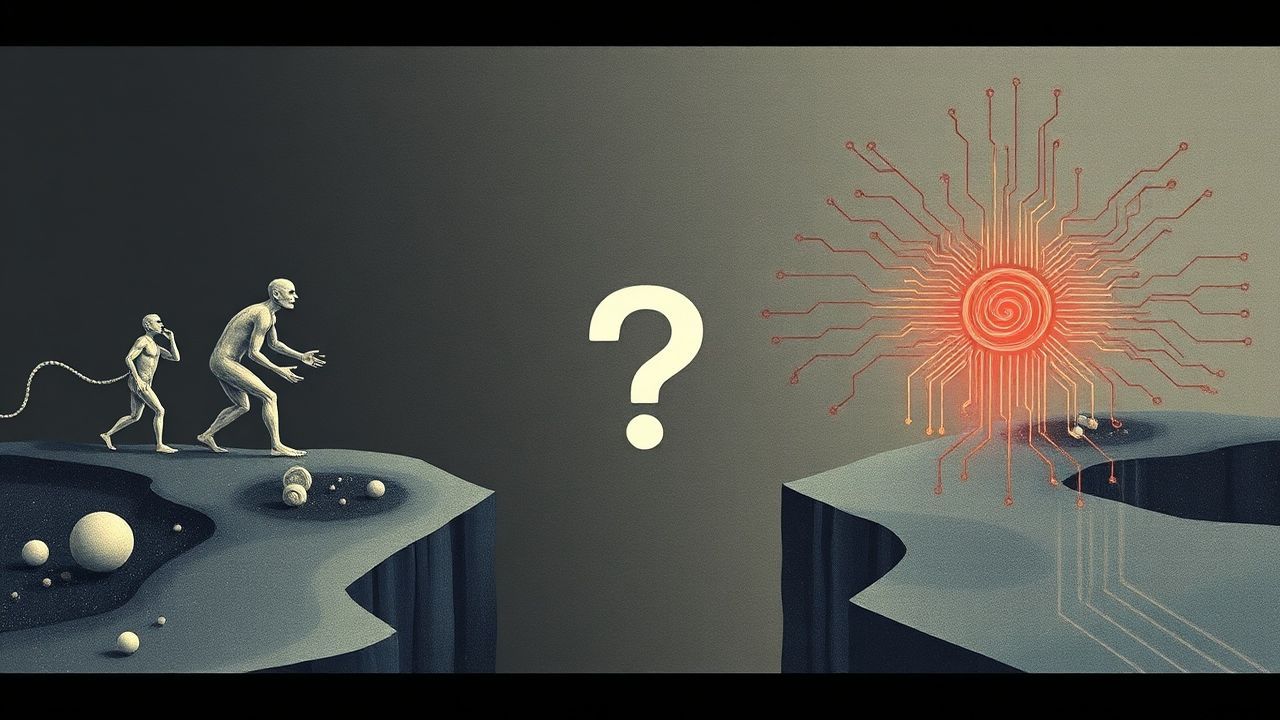
Evolutionary Intelligence vs. Artificial Intelligence
Martin Murin's Twitter post raises a fundamental question about the nature of intelligence that is gaining increasing importance in current debates about artificial intelligence (AI). The central thesis is: Biological intelligence evolved from basic survival and reproduction motivations, while we're attempting to reverse this process with artificial intelligence.
The Evolutionary Perspective
In nature, intelligence emerged as a tool to achieve survival-critical goals. Organisms that were better able to find food, recognize dangers, or reproduce had evolutionary advantages. Intelligence thus developed as a means to an end - as a solution to specific survival problems.
The Reversed Approach in AI
In the development of artificial intelligence, we're pursuing a fundamentally different approach. We start with highly developed cognitive abilities - pattern recognition, logical thinking, problem-solving - and then attempt to give these systems motivation and goals. This reversed process raises the question of whether it can even work.
The Central Question
Murin puts it succinctly: "It's not clear that this direction works." This uncertainty reflects a deeper philosophical question: Can intelligence without intrinsic motivation truly be intelligent? Or is motivation perhaps even the foundation on which intelligence is built?
Implications for AI Development
These considerations have far-reaching consequences for artificial intelligence development. If motivation indeed forms the foundation for intelligence, our current approaches to AI development could be fundamentally flawed. Instead of building ever more complex cognitive systems, we might need to first think about how to integrate motivation and goals into these systems.
Outlook
The debate around this question will gain increasing importance in the coming years. It touches not only technical aspects of AI development but also fundamental questions about the nature of consciousness and intelligence. Whether the reversed approach will ultimately be successful remains to be seen - but the discussion about it is already invaluable.